Ai Music To Video Guide: Creative Integration In 2026
Imagine effortlessly transforming your latest track into a stunning, professional-grade video in minutes, all powered by ai music to video technology. This guide reveals how this innovation is changing creative workflows in 2026, giving artists and creators the ability to blend music and visuals like never before. Discover the journey from early manual methods to today’s seamless AI-driven solutions, explore practical tools and strategies, and learn how to harness the full potential of this technology. Get ready to elevate your music video production and unlock new creative possibilities.
The Evolution of AI Music-to-Video Technology
The journey from traditional video production to the current era of ai music to video innovation has reshaped the creative landscape. Understanding this evolution is key to appreciating how accessible and powerful music video creation has become in 2026.
The Early Days: Manual Visualizers and Animation
Before the rise of ai music to video platforms, music video creation was a resource-intensive process. Artists and producers faced high production costs, complex manual editing, and frequent creative roadblocks. Each video required a dedicated crew, specialized equipment, and weeks—sometimes months—of post-production.
As digital tools advanced during the 2010s and 2020s, music visualizers emerged. These tools offered basic automation, transforming audio into animated waveforms or simple graphics. While visualizers reduced some barriers, they remained limited in scope. Customization was minimal, and the results often lacked narrative depth or true synchronization with the music’s emotional arc.
Independent creators, especially those with limited budgets, found these traditional workflows restrictive. Access to professional-grade visuals was often out of reach, creating a gap between musical vision and visual execution.
Breakthroughs in AI-Driven Video Generation
The landscape shifted dramatically with the introduction of ai music to video generators such as Neural Frames and HeyGen between 2023 and 2025. These platforms harnessed deep learning, computer vision, and advanced audio analysis to automate the creation of visually compelling music videos.
Unlike classic visualizers, modern AI solutions interpret not just the beat, but also the mood, tempo, and even the lyrics of a track. This allows for the generation of visuals that are tightly synchronized and narratively rich. For example, Neural Frames has empowered over 23,000 artists, while HeyGen has powered more than 91 million videos as of 2026.
This evolution marked a clear transition from static, repetitive visuals to dynamic, story-driven content. For a deeper comparison of traditional and AI-powered approaches, see this AI vs traditional music videos overview.
Creative Possibilities Unlocked by AI
What truly sets ai music to video technology apart is its ability to translate music’s nuances into visual storytelling. AI now analyzes tempo, mood, and lyrical content to create hyper-customized visuals, opening new creative frontiers.
Artists can experiment with a spectrum of styles—from psychedelic to hyper-realistic—using simple text prompts or references. This flexibility allows creators to match visuals to their artistic intent without technical barriers.
Most importantly, the democratization of these tools means solo musicians, indie labels, and content creators can now produce professional music videos without large budgets or teams. The ai music to video revolution is not just about technology—it is about empowering every creator to bring their musical vision to life.
How AI Music-to-Video Integration Works in 2026
The ai music to video process in 2026 is remarkably streamlined, blending creativity with advanced automation. Artists and producers now guide their vision from concept to shareable video with just a few intuitive steps. Let us break down how you can harness the power of ai music to video creation, from initial preparation to final export, using the latest tools and workflows.
Step 1: Preparing Your Audio and Creative Direction
Start your ai music to video journey by selecting or producing the music track you want to visualize. Many creators use AI-generated compositions, while others work with traditional recordings. Both approaches are equally valid in 2026.
Define the mood, theme, and story you want your visuals to reflect. Is your track energetic, somber, or cinematic? Gather any lyrics, key phrases, or visual references that could inspire your video’s look and feel. These resources will help guide the AI in aligning visuals with your intended message.
Preparation is the foundation of successful ai music to video projects. Taking time to clarify your creative direction ensures the final product resonates with your audience and stands out among the vast content produced today.
Step 2: Choosing the Right AI Music Video Generator
Selecting a robust ai music to video platform is essential. Platforms like Neural Frames, HeyGen, and others offer unique features and customization options. When comparing tools, look for essential capabilities such as audio-reactive visuals, lyric syncing, style presets, and export formats for different social media.
A helpful resource for navigating platform options is the How to create AI music videos guide, which compares tools and details user experiences. Consider your budget, desired creative control, and the types of videos you intend to make.
Evaluate whether the platform supports your preferred workflow, such as instant video generation from lyrics, tracks, or creative prompts. This choice sets the stage for a smooth and flexible creation process.
Step 3: Inputting Music, Lyrics, and Prompts
Once you have chosen your ai music to video tool, upload your audio file and, if available, enter your lyrics. Most platforms allow you to provide additional guidance through text prompts or mood descriptions.
The AI analyzes your track’s rhythm, phrasing, and emotional cues. It then generates visual scenes that align with the song’s structure and message. Some tools support frame-by-frame adjustments, letting you refine the narrative or highlight specific lyrics.
Experiment with different prompts or moods to see how the AI interprets your creative intent. This iterative process unlocks unique visual combinations and helps you find the best fit for your music.
Step 4: Customizing Visuals and Sync
Fine-tuning is where ai music to video technology truly shines. Adjust color palettes, animation styles, camera movements, and overlays to achieve the desired look. Most platforms provide intuitive controls, so you can tweak pacing, transitions, and visual energy to match beat drops or key song moments.
Advanced tools, like Neural Frames, allow precise synchronization—frame by frame—so visuals align perfectly with your track. Use this flexibility to ensure your video remains engaging and visually dynamic throughout.
Customization empowers both beginners and professionals to deliver distinctive results without the need for traditional editing expertise. The result is a polished, professional-quality video tailored to your vision.
Step 5: Exporting and Publishing Your Video
With visuals in place, finalize your ai music to video by choosing export settings that match your distribution goals. Options typically include HD or 4K resolution and various aspect ratios—vertical for TikTok, square for Instagram, or horizontal for YouTube.
Many platforms enable you to add branding, captions, or voiceovers, making your video ready for global audiences. Batch export features are valuable for teams producing multiple versions, such as remixes or alternate language editions.
Once exported, your video is ready to share, promote, or distribute, leveraging the scalability and creative freedom that ai music to video solutions now provide.
Key Features and Benefits of Modern AI Music Video Generators
Modern ai music to video platforms have transformed how artists and creators bring their music to life visually. These tools offer a blend of creative flexibility, technical innovation, and user-friendly design, making professional music video production accessible to everyone. Let’s explore the standout features that define this new era.

Audio-Reactive Visuals and Perfect Sync
One of the most compelling features of ai music to video generators is their ability to analyze every nuance of a track. The AI listens for tempo, rhythm, and emotional tone, then crafts visuals that pulse and evolve in real time. This synchronization means every beat drop, crescendo, or subtle shift is mirrored by matching animations or effects.
For creators, this means their audience experiences music and visuals as a unified story. Reports from Neural Frames users show that audio-reactive videos increase listener engagement and extend watch times, making this feature a must-have for anyone aiming to stand out.
Lyric Integration and Storytelling
Lyric integration takes ai music to video production to another level. Modern platforms can extract lyrics directly from a track and animate them on screen. This creates dynamic lyric videos and supports stronger storytelling, whether for album releases, promotional teasers, or concert visuals.
By animating key phrases and aligning text with musical phrasing, artists can highlight emotional moments or deliver narrative-driven content. For a deeper dive into AI-powered lyric visuals, check out this AI lyric video generator guide.
Creative Control Without Complexity
Ai music to video tools are designed for both novices and professionals. Intuitive interfaces allow users to customize animation styles, color themes, transitions, and overlays without the need for advanced editing skills. Many platforms offer drag-and-drop functionality and real-time previews, so creators can experiment freely.
Here’s a quick comparison of customizable features:
| Feature | Benefit |
|---|---|
| Color themes | Match genre or mood |
| Animation styles | Personalize visuals |
| Transitions | Smooth scene changes |
| Overlays | Add branding/captions |
This balance between creative control and simplicity makes the ai music to video process efficient and enjoyable.
Multilingual and Global Output
Reaching a global audience is easier than ever with ai music to video tools. Many platforms now support automatic translation, voice cloning, and captioning in multiple languages. This enables creators to localize their content for diverse audiences and expand their reach internationally.
For example, HeyGen offers instant voiceover generation and supports several languages, making it possible to publish videos that connect with fans worldwide. These multilingual features are essential for modern music marketing and audience growth.
Scalability and Speed
Efficiency is a core advantage of ai music to video technology. Videos can be generated in under ten minutes, allowing creators to keep pace with fast-moving trends and campaigns. Batch export features let teams produce multiple versions for remixes or different platforms with minimal effort.
Key benefits include:
- Rapid video generation for timely releases
- Batch processing for alternate cuts
- Easy updates for evolving creative needs
This scalability streamlines workflows for both solo artists and marketing teams.
Security and Content Ownership
Security and ownership are top priorities in ai music to video production. Leading platforms offer encrypted uploads and guarantee that creators retain full rights to their content. Videos can be downloaded instantly in HD or 4K without watermarks, ensuring professional results ready for distribution.
This commitment to privacy and ownership gives creators peace of mind as they share and monetize their work across various platforms.
1 More Shot: AI-Powered Music Video Generation Platform
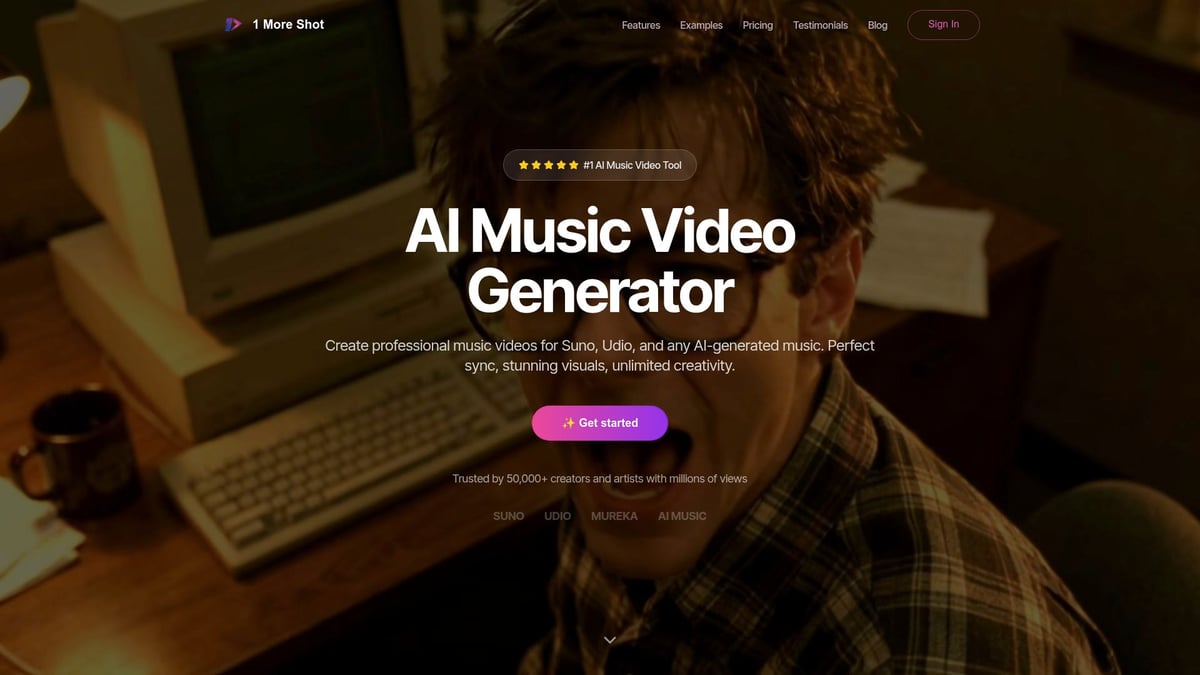
The ai music to video revolution has given rise to powerful platforms, and 1 More Shot stands out as a leading force in 2026. This innovative tool enables creators to produce professional, visually stunning music videos in just minutes, with no technical expertise needed.
What is 1 More Shot?
At its core, 1 More Shot is an ai music to video generator designed for speed, flexibility, and creative freedom. Whether you are working with AI-generated tracks or traditional recordings, the platform offers instant video generation. Advanced lip-sync technology ensures that vocals align perfectly with on-screen visuals, while frame-by-frame creative control allows for precise adjustments.
Key Features and Benefits
The ai music to video workflow with 1 More Shot is both intuitive and powerful. Users can export in multiple formats, including vertical for TikTok, square for Instagram, and horizontal for YouTube. The smart asset library and real-time preview make customization effortless. No prior video editing skills are required, making professional-grade videos accessible to everyone.
Who is 1 More Shot For?
1 More Shot caters to independent musicians, producers, content creators, AI music enthusiasts, and marketing teams looking for scalable content solutions. With over 50,000 creators and 24/7 AI processing, the platform supports a vibrant and collaborative community. Robust support resources further empower users to maximize their creative output.
How Does it Work?
The ai music to video process is seamless. Simply upload your track, select a visual style, customize animations, and export your video for any platform in less than five minutes. The platform’s competitive edge lies in its industry-leading lip-sync, instant HD export with no watermarks, and multi-platform readiness.
To see how 1 More Shot compares to other leading tools, explore this Best AI music video tools guide for a broader perspective on the evolving landscape.
Creative Strategies and Best Practices for AI Music-to-Video Integration
Creating unforgettable music videos with ai music to video tools demands more than just automation. It requires a thoughtful approach that blends technology with artistry. Let’s explore the top strategies to elevate your video creations.
Maximizing Artistic Impact
Begin with a clear vision for your ai music to video project. Define the story, emotions, and visual motifs that will amplify your track’s message.
- Map out a narrative arc that mirrors the song’s structure.
- Use genre-specific AI prompts for styles like psychedelic, cinematic, or surreal visuals.
- Combine automated scenes with manual tweaks for unique, authentic results.
Referencing the Vision-to-Music Generation Survey, aligning visuals semantically and rhythmically with your music enhances artistic depth. Experimentation with mood boards and visual references helps the AI deliver results that truly fit your creative intent.
Leveraging Audio-Reactive Features
For ai music to video workflows, harness audio-reactive features to ensure visuals move organically with your music. Modern generators analyze tempo, beat, and dynamics, producing animations that pulse and shift in real time.
Platforms like Neural Frames and HeyGen allow you to mark key musical moments, such as beat drops or chorus entries, for heightened visual emphasis. According to the VidMusician: AI Video-to-Music Generation Framework, advanced frameworks now enable semantic and rhythmic alignment, making every visual element tightly synchronized with your track.
Fine-tuning these features results in videos that not only look professional but also feel emotionally connected to the music.
Enhancing Engagement and Shareability
To maximize reach, adapt your ai music to video output for multiple platforms and formats. Create short, looping clips for social media, in addition to full-length versions for YouTube or streaming.
- Add branded overlays and artist logos.
- Use subtitles and lyric animations for accessibility.
- Incorporate call-to-actions at the end or within the video.
These steps make your content more discoverable and encourage sharing across diverse audiences.
Iteration and Experimentation
One of the greatest strengths of ai music to video technology is its speed and flexibility. Rapidly test different visual styles, transitions, and effects to discover what resonates best.
Update videos easily for remixes, alternate language versions, or evolving campaigns. Use AI’s ability to generate multiple drafts, then refine the best version. This iterative process leads to more engaging and polished final products.
Collaboration and Community
Engage with the broader ai music to video creator community to refine your craft. Share works-in-progress for feedback, participate in online forums, or join showcase events hosted by leading platforms.
Learning from case studies and peer reviews accelerates skill development. Collaboration also opens doors to new ideas, techniques, and creative partnerships, empowering you to push the boundaries of what AI-driven music videos can achieve.
Future Trends: Where AI Music-to-Video Is Heading by 2026 and Beyond
The world of ai music to video is accelerating into uncharted territory. As we look beyond 2026, a new era of creativity is unfolding. Artists, producers, and creators are not just keeping pace—they are setting trends that redefine what music videos can be.
Advancements in AI Video Generation
AI music to video platforms are now capable of predictive scene building. These systems anticipate musical shifts, generating visuals that flow seamlessly with the audio. This means artists no longer have to manually sync every beat or transition.
Real-time video generation is making live performances more immersive. Musicians can perform, while AI interprets their music instantly, projecting dynamic visuals that respond to every note. Interactive experiences are emerging, where fans can influence visuals during live streams.
These advancements are transforming both the creative process and audience engagement. The future of ai music to video is about speed, precision, and real-time artistry.
Hyper-Personalization and Immersive Media
Personalization is at the heart of the ai music to video revolution. AI-generated avatars and face swaps allow artists to create character-driven stories that resonate with fans on a deeper level.
Integration with VR, AR, and spatial audio is opening new dimensions for storytelling. Viewers can step inside music videos, explore virtual environments, and interact with elements that respond to their movements.
By merging technology and creativity, ai music to video tools are making immersive media experiences accessible to artists of all sizes. The result is a more engaging, memorable connection between music and visuals.
Democratization and Global Access
The democratization of ai music to video is lowering barriers for creators worldwide. Mobile-first platforms and instant publishing tools mean anyone can produce and share professional videos, regardless of technical skill or budget.
Multilingual capabilities are expanding, making it easier for artists to reach global audiences. Cross-platform compatibility ensures videos are optimized for every channel, from TikTok to YouTube.
According to Seagate’s 2026 Creativity Renaissance Prediction, a surge in video content creation is fueling a new era of creative expression, powered by AI. This trend underscores the role of ai music to video tools in shaping the future of global music culture.
Industry Impact and Monetization
The ai music to video landscape is reshaping industry dynamics. New revenue streams are emerging, including:
- AI-powered videos for marketing and fan engagement
- Monetized content for NFT releases
- Scalable campaigns for labels and independent artists
Industry adoption is accelerating. Labels and indie musicians are using ai music to video solutions to scale content output and reach wider audiences. The AI Music Market Growth Forecast highlights rapid growth in adoption rates, supporting the expansion of this creative sector.
Case studies show that ai music to video platforms enable creators to produce more content, faster, and with greater artistic freedom.
Ethical Considerations and Creative Ownership
As ai music to video technology evolves, ethical questions come to the forefront. Ensuring content authenticity is critical. Artists must manage copyright, protect their creative work, and remain transparent about AI’s role in production.
Ongoing dialogue is needed to define the boundaries between AI as a creative collaborator and as a tool. Balancing innovation with responsibility will shape the trust and acceptance of ai music to video in the creative community.
Ownership and rights management features are becoming standard, giving creators peace of mind as they embrace these new workflows.
Data-Driven Insights and Community Growth
Data analytics are empowering artists to refine their ai music to video strategies. Platforms now offer insights on viewer engagement, retention, and viral potential.
Online communities and resource hubs are growing rapidly. Creators are sharing knowledge, collaborating on projects, and showcasing their work. This collective learning environment accelerates both artistic growth and technical innovation.
As the ai music to video community expands, expect a surge in collaborative platforms, tutorials, and user-driven showcases. The next wave of creators is already building the future.
If you’re inspired by how AI is reshaping music video creation—making it faster, more accessible, and more creative than ever—why not experience it for yourself? With platforms like 1 More Shot, you don’t need a production team or technical know how to turn your music into stunning, professional grade videos. You can focus on your creative vision while the technology handles the details, from lyric syncing to flawless visual timing. Ready to take your next project to the next level?
Start Creating Now